
PhD Student Austin Nash Joins the Group
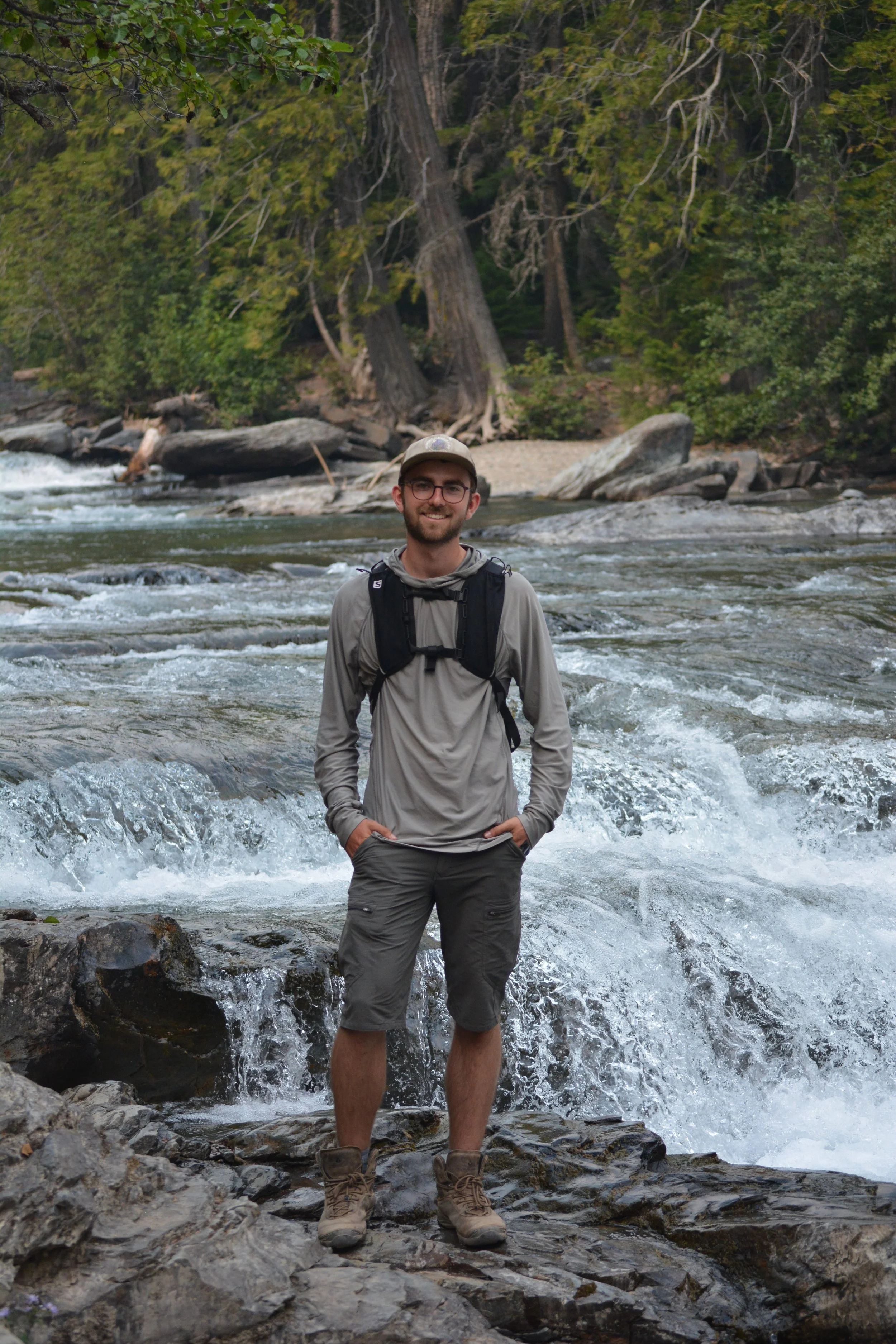
Austin Nash, PhD Student in the Department of Fisheries, Wildlife, and Conservation Sciences, Oregon State University
Austin joins the project from a Presidential Management Fellowship at the U.S. Geological Survey Western Ecological Research Center, where he worked on a variety of topics related to sagebrush ecosystems in the U.S. West.
“The most fun lies in seeing and studying the unknown.”
-Aldo Leopold
Leveraging quantitative advances and rigorous fieldwork to advance our knowledge of gray-tailed vole ecology
Population dynamics emerge from the interplay of intrinsic species-specific traits, environmental factors including habitat and climate, and interactions between competition, predation, and disease. Two of the greatest contemporary issues facing ecologists are determining how and to what extent intra- and inter-specific interactions drive system dynamics, and what the impacts of climate change will be on said dynamics. Gray-tailed voles display as-yet uncharacterized and unpredictable cyclical population dynamics. Anecdotally, frequency and amplitude of peaks are increasing, associated with changes in climate and environment. This program will establish and conduct multi-species sampling with the primary goal of producing empirical data to test ecological theory regarding the drivers and mechanisms of interannual population dynamics in gray-tailed voles. The research project includes scope to assess the impacts of weather, season, predators (e.g. long-tailed weasels, skunks, coyotes), parasites (Nematoda spp., Ixodes spp.), and pathogens (including pathogens of human concern that the species serves as a reservoir host for i.e. Leptospira spp.) on key demographic parameters (abundance, survival, recruitment).
