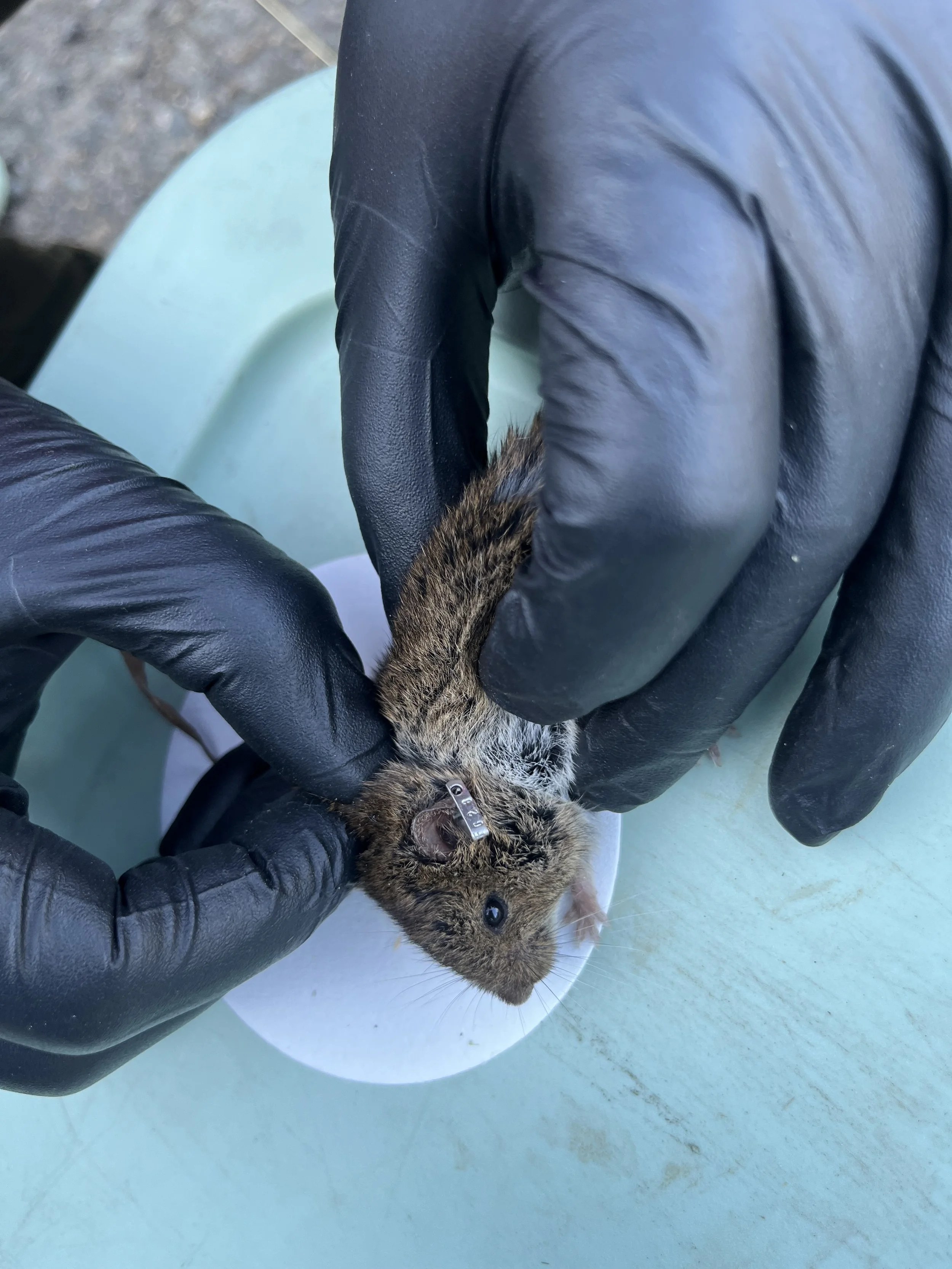
Long-term monitoring of voles in the Willamette Valley begins!
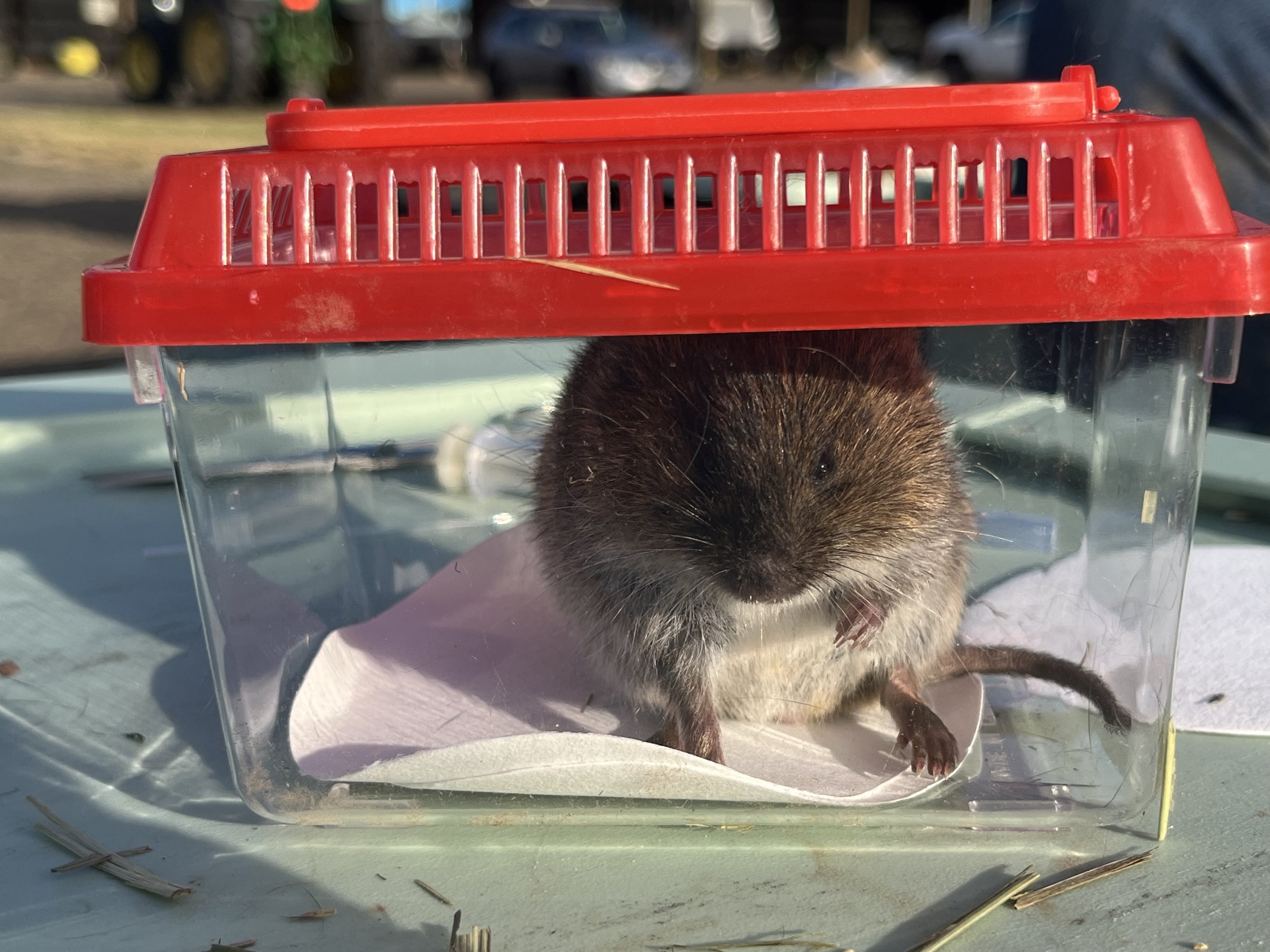
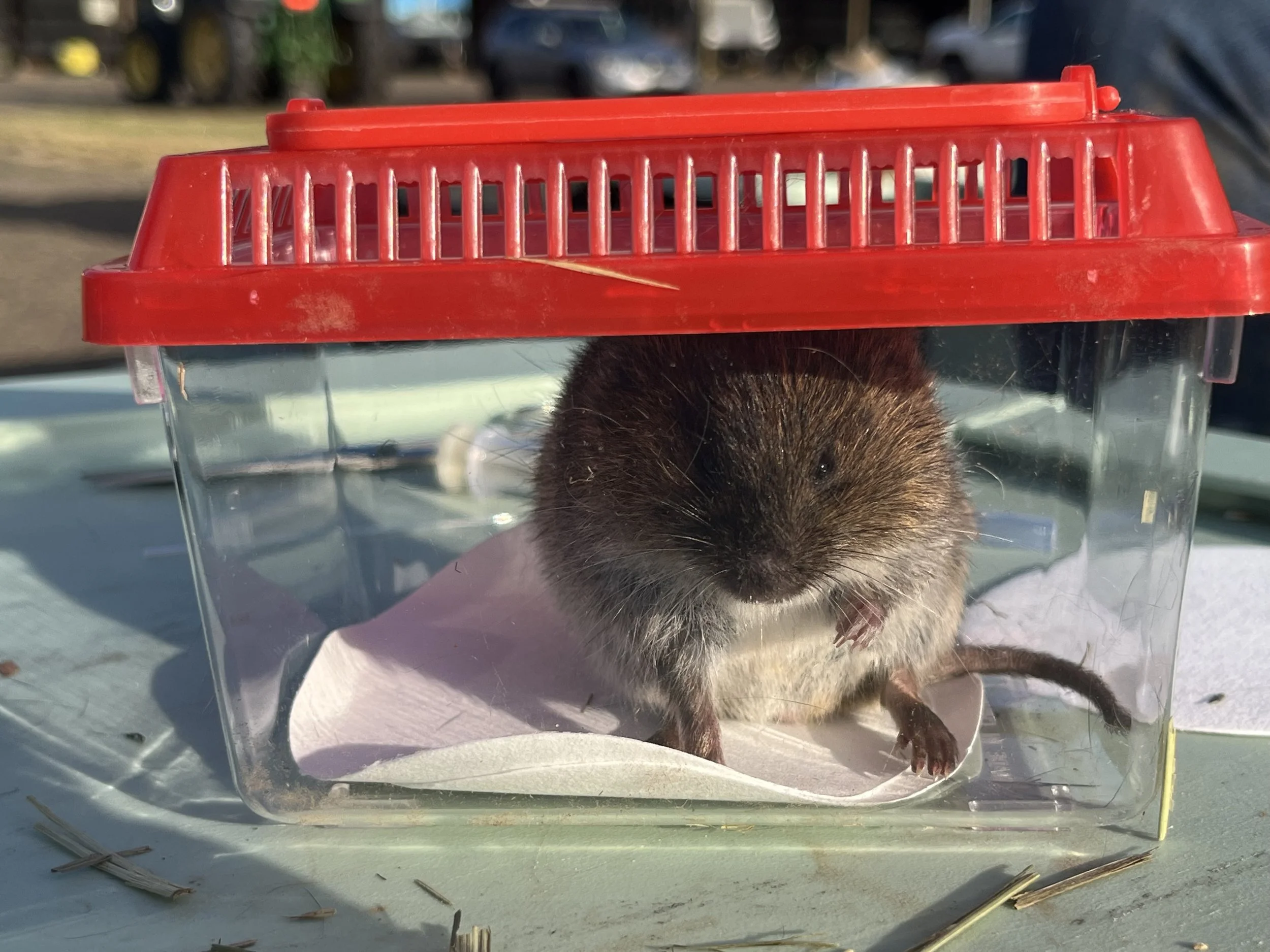
A gray-tailed vole caught as part of a long-term monitoring study awaiting release
One of the greatest challenges to managing voles in the Willamette Valley is the unpredictability of their cycles, and uncertainty in the disease risk they pose, both of which remain uncharacterized. This summer we established two long-term monitoring sites to take first steps towards resolving these uncertainties.
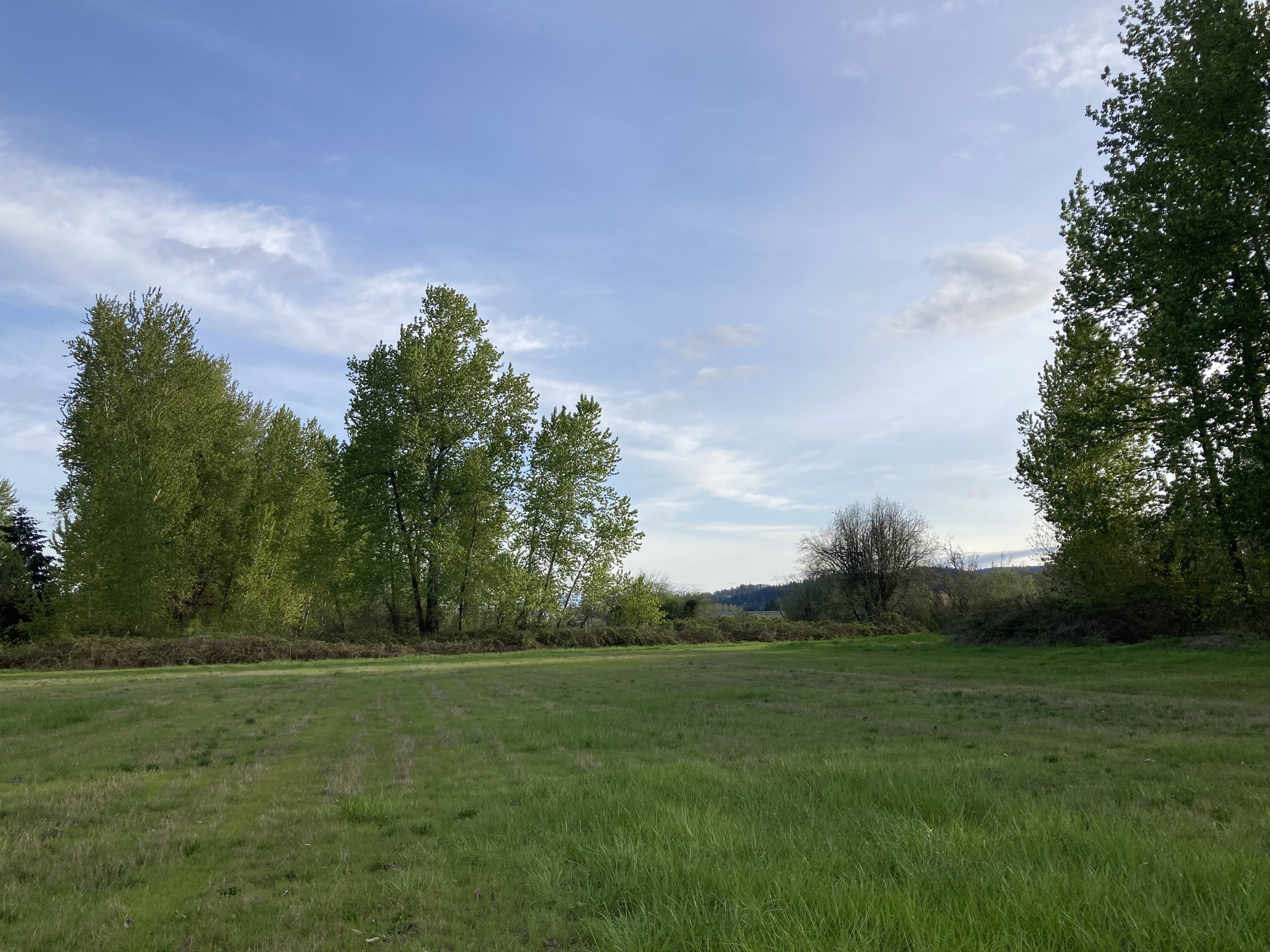
Starting in June 2025, a collaborative team made of researchers in the Department of Fisheries, Wildlife, and Conservation Sciences in the College of Agricultural Sciences and the Department of Biomedical Sciences in the College of Veterinary Medicine established and starting sampling two field sites in the Willamette Valley (see map below). One site was a natural grassland at E.E. Wilson Wildlife Area, and the other, a working field at Caldwell Hill (huge thank you to the Crestmont Land Trust for providing us access and supporting this research!).
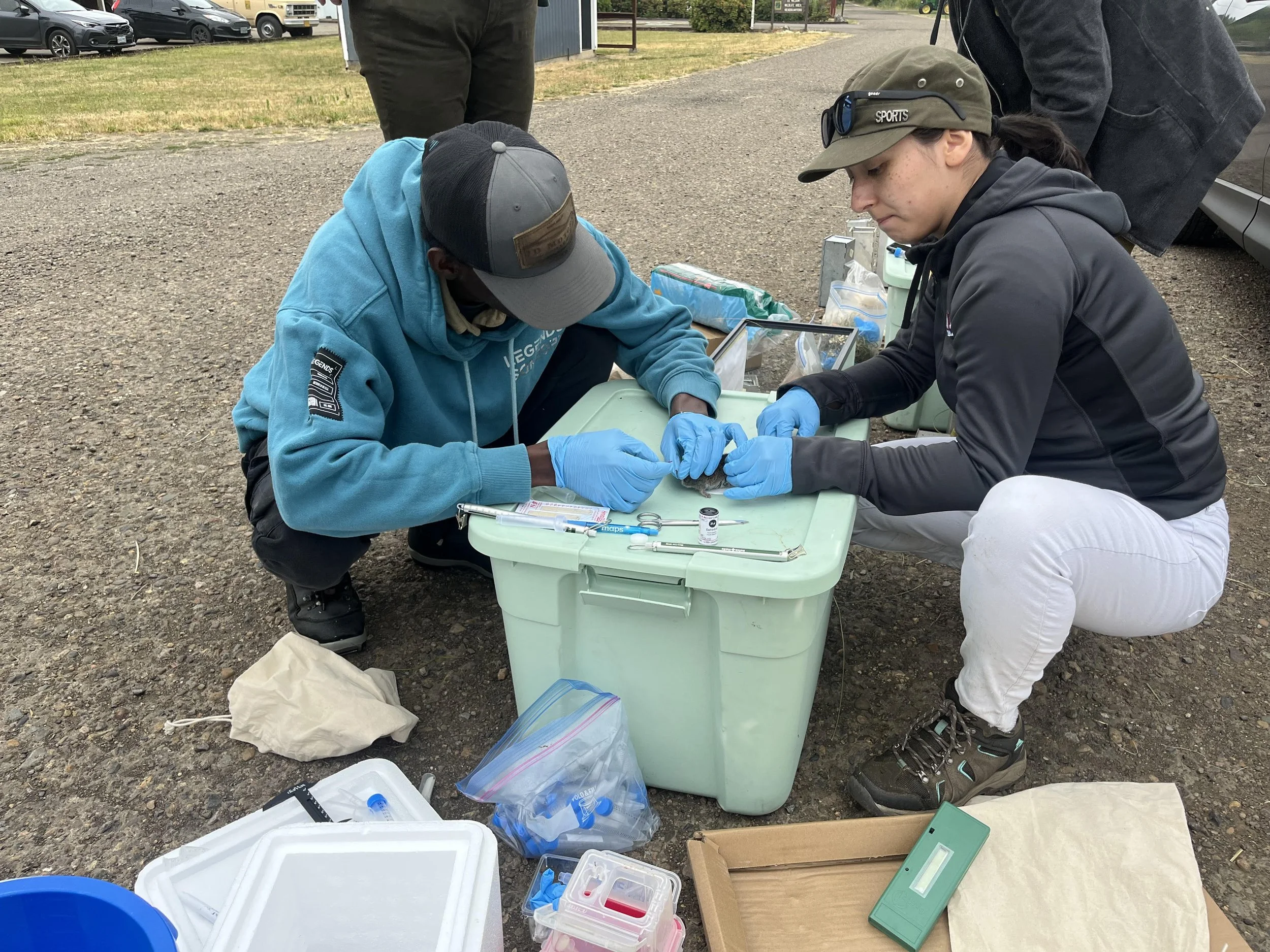
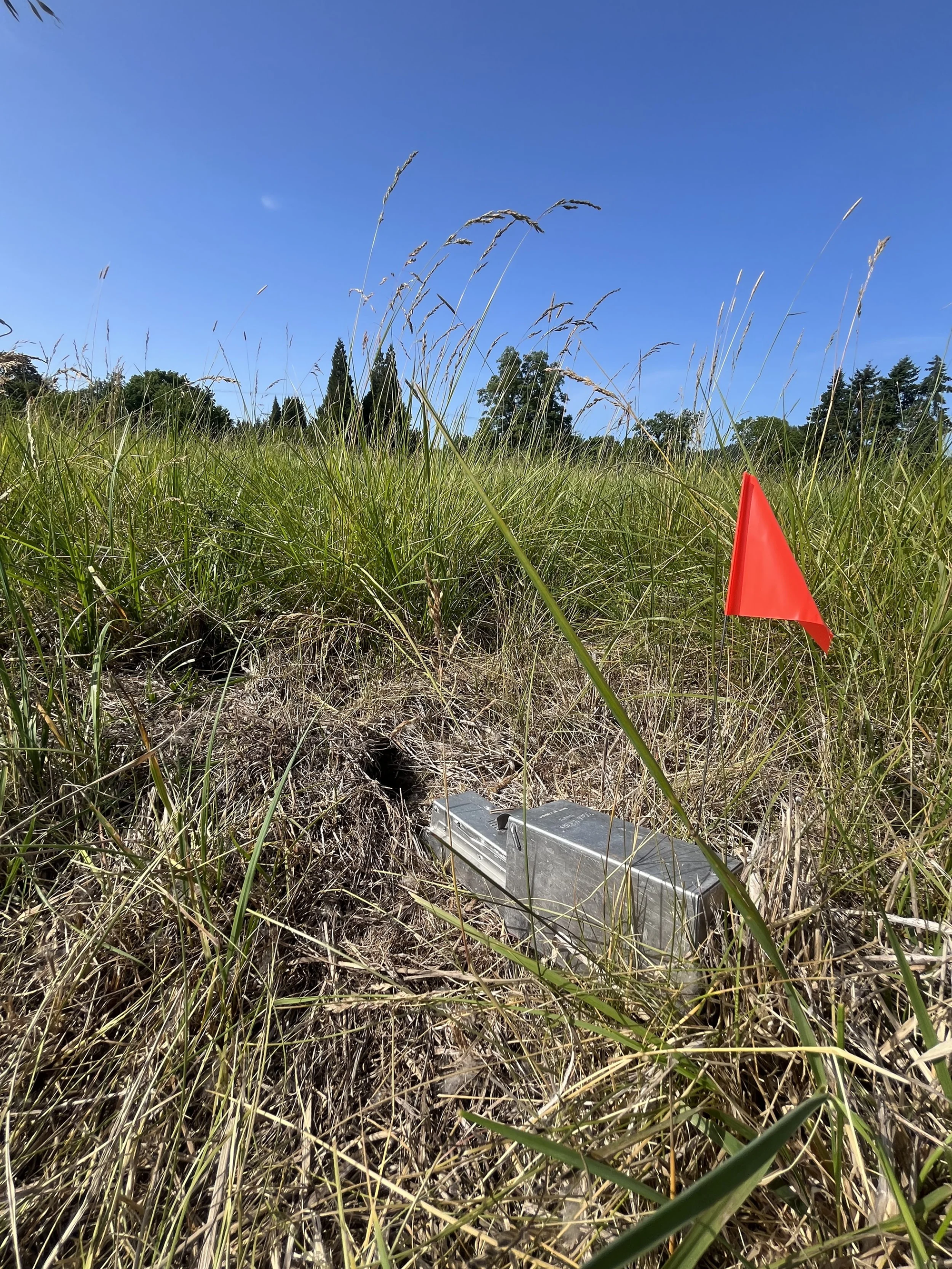
A key challenge loomed - previous researchers at USDA and OSU Extension had reported challenges and failed attempts when trying to trap these endemic voles, with the species apparently showing an adversion for traps. Our first task was to develop a method, and determine an effective bait to entice our furry little subjects into our traps. At each site, grids of over 100 traps using different combinations of trap types, and baits (apple, carrot, oats, sunflower seeds, grass seed, and nut mixes) were set. These traps were live for weekly sessions, every three weeks. Every small mammal that was captured was processed, given a unique identifying mark (both a microchip, and an ear tag), and had a variety of biological samples taken.
The objectives of our monitoring included: 1) developing an effective methods for sampling voles which could be used long-term, 2) getting initial baseline population estimates for voles year-round at multiple sites, and 3) assey these populations for pathogens they are known to carry and determine disease risk they pose (previous research in the region has shown the species to be a prolific carrier of Leptospira, which is the causative agent of Leptospirosis, a bacterial infection which infects humans, and in ~5% of cases, results in death.
While the start was slow - with failures to catch voles during the entire first week of sampling despite having over 120 traps set humbling, quickly lessons were learnt and captures ramped up. In fields of grass, food aplenty, the voles had little interest in our measly offerings of oats and carrots. While apple managed to draw a few individuals into our traps, we soon learned the bait to really get their attention, eau de vole! The simple answer to drawing both adult males and females to our traps was the scent of another female vole - a threat to females who defend strict territories, and enticing to males looking for another mate.
We continued trapping throughout summer catching close to 50 individual voles in our two study sites, recording their weights, sexes, ages, and reproductive status. Each vole was uniquely marked, and a sample of blood, urine, and faecal taken for disease testing.
Stay tuned for results from the summer season!