
Long-term monitoring of gray-tailed voles to understand and predict their population dynamics
To develop accurate forcasting tools, we need to understand what drives the irregular boom-bust cycles of gray-tailed voles
Rodents such as gray-tailed voles which display irregular multiyear cycles pose a wicked management challenge for local communities, especially, growers and producers. Populations all but vanish during low phases, and then seemingly inexplicably erupt. During population peaks growers and producers report losses to crops as high at 90%. Despite the losses incurred, the dynamics of these voles endemic to the Willamette Valley remain uncharacterized, making them impossible to predict, and extremely difficult to manage. If we knew when and where vole populations were going to increase, growers and farmers could use this to inform their decision making. To achieve this, we need accurate estimates of vole abundance throughout the various phases of the their interannual cycle, we need a long term monitoring. The best long term data we have to date stems from two-years of monitoring conducted between 1991-1993 conducted by Jerry Wolf and colleagues at E.E. Wilson Wildlife Area (Wolf et al. 1996). Unfortunately, this data was all collected during a low phase, and then discontinued, so doesn’t provide us insights into the mechanistic underpinnings of the unpredictable dynamics of these populations. So we established a number of long term monitoring sites in the Willamette Valley in the summer of 2025, which we monitor using multi-method approaches every month!
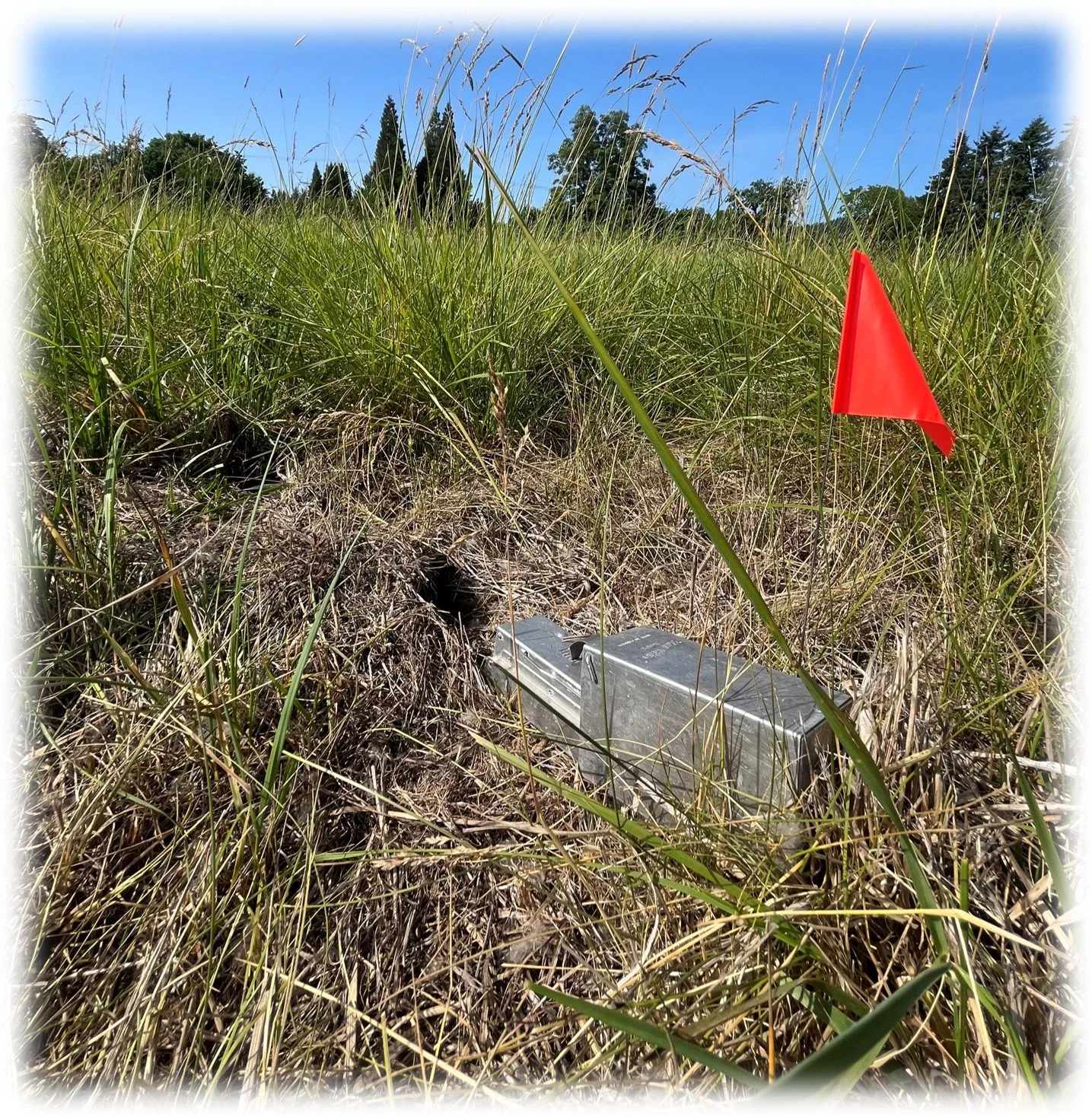
Why understanding what drives the voles population dynamics matters?
We are not the only place in the world in which humans share space with cyclical rodents, indeed their are examples of rodents that display simiarly irregular boom-bust cycles around the world, from collared lemmings in northern Canada, to great gerbils of Kazackstan, and the mouse plagues of Australia. All over the world, humans contend with rodents that display population outbreaks. As well as being severe pests and threatening food security, cyclical rodent populations can also be hosts for pathogens of concern for humans. Thus, in many places throughout the world, long term monitoring has been conducted for decades (see below).
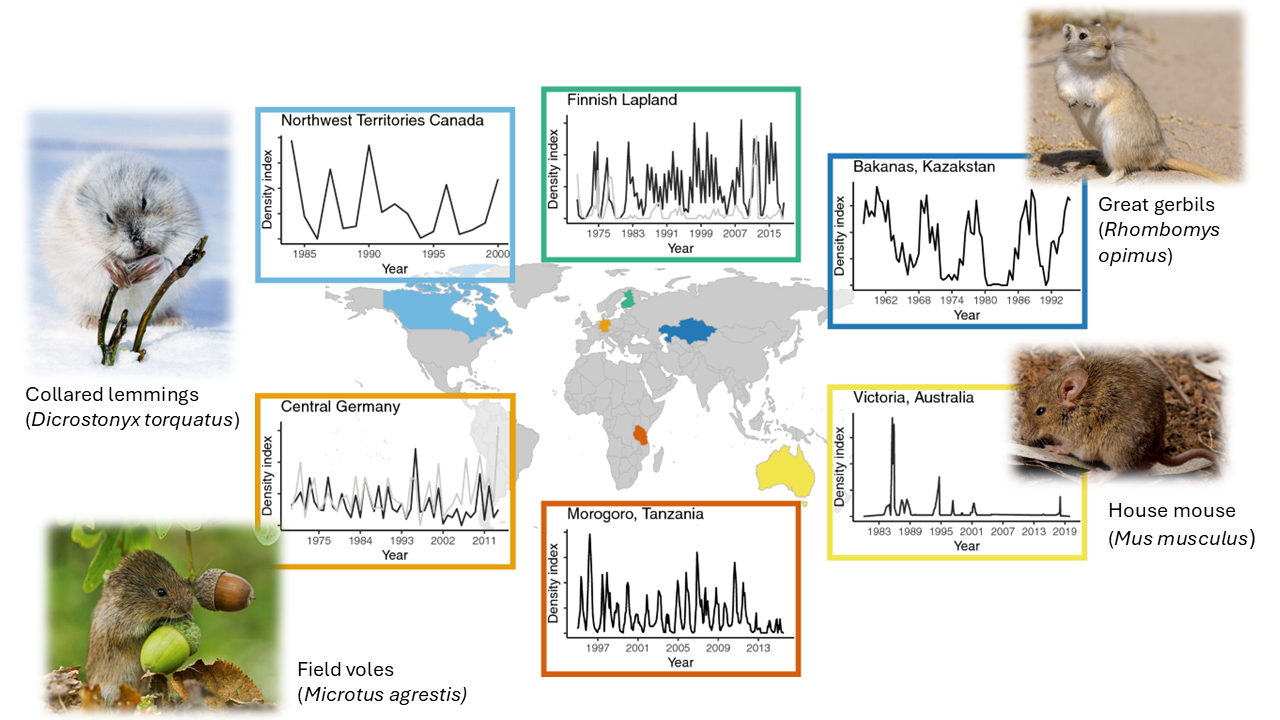
Cyclical rodents across the globe: this map shows the long term population dynamics and cycles of different cyclical rodents across the globe including collared lemmings in Canada (light blue), field voles in Germany (orange), Great gerbils in Kazakstan (dark blue), and house mice in Australia (yellow).
It is long term data on abundance and population demographics over time that will enable us to identify key drivers of the cycles. By identifying key underlying drivers, we could produce forecasting tools to predict when and where vole populations would increase in inform effective and coordinated management. The potential factors that this result will examine include 1) weather and resource availability, 2) parasites and disease, 3) generalist and specialist predators, and 4) intra-specific competition.
